
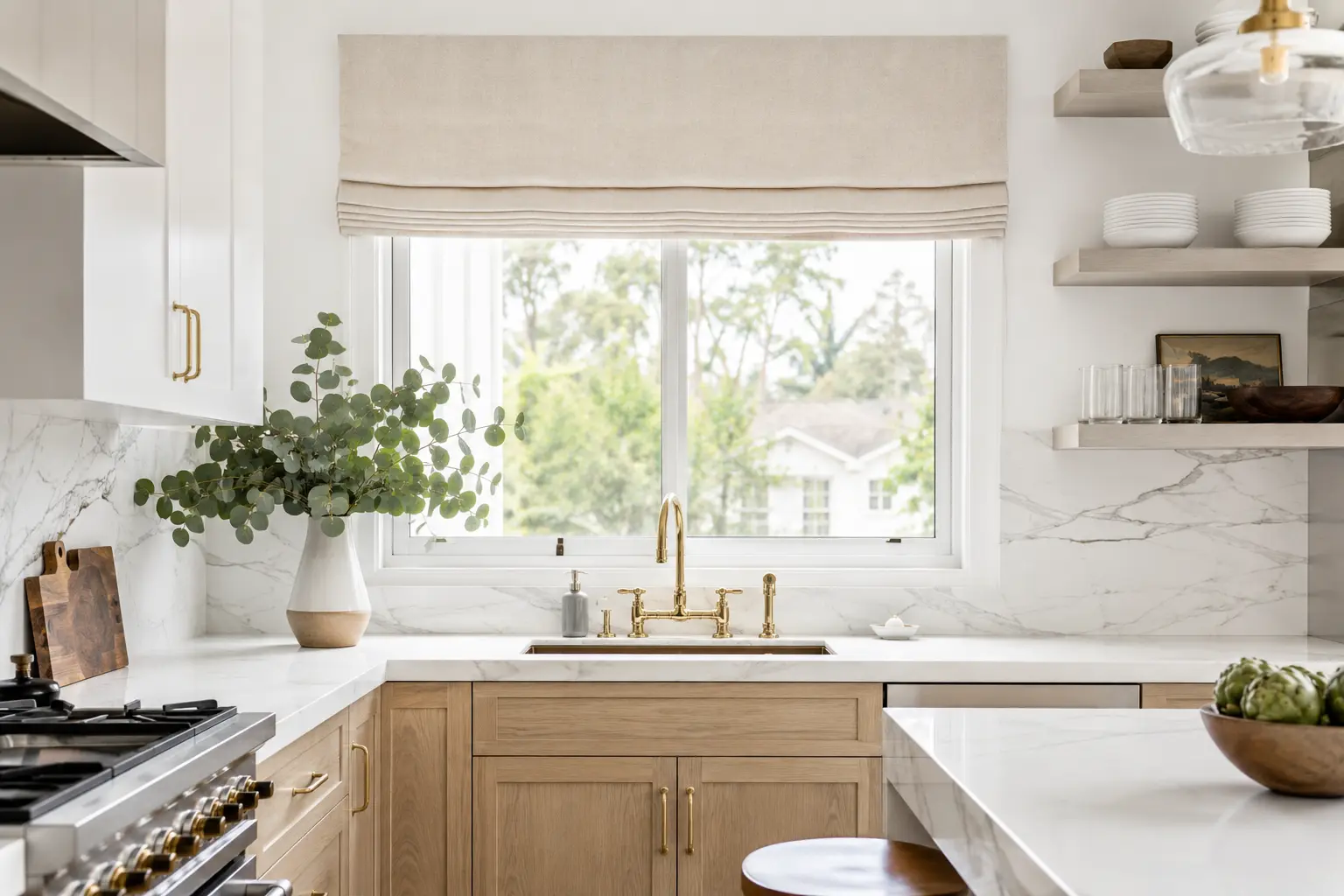
Every room in a home serves a distinct purpose, possesses unique lighting conditions, and demands a specific level of privacy. Because of this, a one-size-fits-all approach to window coverings simply does not work. The beautiful, sweeping drapery panels that bring luxury and warmth to a formal dining room might be completely impractical over a busy kitchen sink or in a high-traffic home office.
Choosing custom window treatments allows you to design tailored solutions that fit the exact architectural dimensions and functional needs of every individual space. Rather than compromising between style and performance, custom fabrication allows you to select the perfect fabric weight, pleat style, and operating system for every window in your house.
In this room-by-room design guide, we break down how master-level artisans approach window transformations for the living room, bedroom, and kitchen, helping you create a cohesive, functional, and visually stunning home.
The living room is typically the central hub of a home—a space designed for entertaining guests, relaxing with family, and showcasing your personal interior style. Visually, window treatments in this room should act as the frame that defines the home’s natural light and character.
To create a sophisticated, tailored look, floor-to-ceiling custom drapery is highly recommended. Hanging drapery panels as close to the ceiling as possible—and letting them cascade all the way down to just a millimeter above the floor—creates an optical illusion that elongates the room, making low ceilings feel much loftier and grander.
The most effective living room configuration utilizes a multi-layered hardware system:
In the bedroom, functionality takes center stage. The primary goals are absolute privacy, sound dampening, and total control over light elimination to support a healthy circadian rhythm and deep, uninterrupted sleep.
For primary bedrooms and nurseries, custom blackout curtains are an absolute necessity. Unlike ready-made retail blackout panels that often let bright shafts of light leak over the top or around the sides, a custom-tailored workroom installation isolates the window entirely.
Fabricators utilize strategic wall returns—wrapping the fabric around the side edges of the drapery rods directly back to the wall—to eliminate the vertical light gaps that disrupt sleep.
The kitchen presents an entirely different set of environmental challenges. Windows in this area are frequently exposed to steam, moisture, food splatters, and high heat. Additionally, kitchen windows are often positioned directly above countertops or sinks, meaning long, flowing drapery fabric is a major safety hazard and highly impractical.
For a clean, space-saving, and highly functional kitchen solution, custom fabric Roman shades are the premier choice. Roman shades combine the soft, inviting texture of traditional drapery fabric with the streamlined, architectural operation of a roller shade. They fold up seamlessly onto themselves when raised, keeping the fabric completely clear of wet countertops, cooking spaces, and kitchen prep surfaces.
| Room Type | Recommended Treatment | Primary Goal | Recommended Fabric Style |
| Living Room | Layered Drapery (Sheers + Face Panels) | Aesthetic framing, light filtering, glare control | Ripplefold or Euro Pleat in organic linens/textures |
| Bedroom | Multi-Layered Custom Blackout Curtains | Light elimination, sound dampening, total privacy | Pinch Pleat or Euro Pleat with integrated blackout interlining |
| Kitchen | Custom Fabric Roman Shades | Space-saving, moisture resistance, ease of operation | Flat Roman style using durable performance textiles |
No matter which room you are upgrading, the difference between an ordinary space and an extraordinary interior always lies in the precision of the fit. A professional, custom-crafted process takes into account every unique architectural nuance of your home—from slanted ceilings and complex crown moldings to specific coastal light conditions. By managing every step from precise site measurement to final white-glove installation, an artisan workroom guarantees that your window treatments operate smoothly and look absolutely flawless.